The sole purpose of this blog is to share the knowledge that I have learned. However, it is merely for my own use, but if someone does stumble across my blog then feel free to read and if you have some criticisms of my posts or additions feel free to leave them. Although, I am not a native English speaker therefore it is difficult for me sometimes to convey my ideas or to write in a manner that readers may find satisfying. I did a mayor in political science, as in I graduated from University this spring (2019). This does not mean that I am infallible or that I cannot make mistakes. Any critcisms of my work is welcomed whether that come from the politically engaged or just the average layperson. Another purpose of this blog is to enhance and further myself within writing.
That is the purpose of this blog, and it will not change unless I actively state so in a new blog post.
I shall explain how socialism can work on a larger scale than the mere camping trip thought experiment of Cohen (Cohen 2009, 3-7). An often brought up criticism of socialism is that it cannot work in larger-scale societies. They argue that on the camping trip everyone knows each other and has family ties or friendly ties to the others. However, in this paper, I shall explain how nationalism and socialism go hand in glove, as I shall explain and untangle the ideology of fascism and how socialism can coincide with it. I shall take the Cohen campaign trip thought experiment, and I shall argue that national socialism and fascism do not suffer from the same conundrum, but while ideologically speaking, it can retain many socialistic features. Cohen argues that a community aspect is necessary, however, the analysis is incomplete (Cohen 2009, 34; Aarebrot and Evjen 2014). Therefore, I shall argue in this essay that national socialism and fascism can solve the puzzle put forth by the critics of Cohen. I shall explain and put forth critical distinctions between fascism, national socialism, and socialism, while Cohen’s socialism suffers from the criticism of “it could work on a campaign trip, where everyone knows each other”, the two former ones does not. To a younger audience, it might be better to use the video game Minecraft as an example rather than a campaign trip, because the same logic applies. Although national socialism is derived from fascism, it is fascism with a racialized and ethnocentric and racial spin (Ball et al 2016, 199-220). It must be mentioned that I am not an advocate of fascism or national socialism, this essay is mainly theoretical and philosophical rather than empirical, thus I make the distinction between philosophy and the application of it. Although, I shall sometimes point to certain cases later in the paper to prove some points, however, the paper is mainly theoretical. This paper is by no means advocating for these forms of philosophies being applied, and the same goes for socialism and communism in my view. This paper is dedicated to explaining, untangling the philosophy of Fascism. The main goal of the paper is; Explain fascism and national socialism and explain how fascism does not suffer from the community aspect of Cohen’s socialism while retaining many socialistic elements and being inherently socialist in many ways. Fascism and national socialism are spiritualistic philosophies and are a revival of German Idealism and embraces the counter-Enlightenment (Ball et al 2016, 199-210). However, I shall argue that the fundamental metaphysics of Fascism comes from its etymology, as in the fasci, which is something that far predates the early 20th century and that has been argued to come from Roman times (Gentile and Mussolini 1932). Thus, fascism as a concept, a philosophy, and as an ideology did not come from the 20th century. Although, Giovanni Gentile is credited with birthing fascism due to him being the most influential and explaining the metaphysics of fascism, however, the fundamental principle of fascism is “together we are strong”. Many sticks bundled and tied together in a fasci, where the sticks represent the nation/tribe, and the ax in the middle represents the will of the nation/tribe manifesting itself in a strong leader (Gentile and Mussolini 1932).
Moving onto Cohen’s socialism.
2.0 Cohen’s Socialism: A Discussion & Explanation Here I shall give a brief explanation of G.A. Cohen’s socialism and his thought experiment. The thought experiment begins as follows; imagine yourself on a camping trip with your friends or family or imagine yourself playing Minecraft with your friends and family. In this scenario, socialism would be the most attractive alternative out of all the feasible alternatives. The principles of socialism in Cohen’s view are twofold; firstly, equality, and secondly community. Although, Cohen argues that there would be no hierarchy between the people on the campaign trip and that the main goal of the campaign trip is that everyone should have a good time. This is a radical egalitarian view; however, it is not quite correct. Socialism does believe that one should minimize hierarchies, but they cannot be removed completely. Even on a campaign trip, a hierarchy might form naturally because the people on the campaign trip have different skills. There might be a person who is good at fishing and is very competent at catching a lot of fish. Therefore, the “fishing master” of your group will gain authority within his field of expertise and he can show the others how it is done. This fascism would argue is a natural hierarchy formed out the peoples’ inherent natural inclinations towards certain things such as fishing. You need someone to make decisions on certain areas due to their expertise within such an area since one person cannot exceed at everything. In addition, one has familial hierarchies where children cannot be trusted to make very complex decisions that have big consequences, they need their parents to be authority figures and have the parents guide them through life. Such hierarchies are inevitable, and one cannot do away with such hierarchies, however, such hierarchies can be minimized (Cohen 2009, 3-20). Indeed, Cohen admits this is the case already when he said that each member of the campaign trip brings something to the table. One person may bring fishing rods, another a football, and another a deck of cards et cetera. Each person brings something to the table on the campaign trip, which makes it highly likely that said person who brings the fishing rods already knows how to use those fishing rods (Cohen 2009, 12-30). Moreover, Cohen does not argue for equality of outcome as socialists have argued, but for equality of opportunity, which fascism agrees with. Fascism is about creating a stronger nation and stronger people through self-actualization (Gentile and Mussolini 1932). Fascism believes that one should have the opportunity to self-actualize even if you come from a poor family.
2.1 Cohen’s Socialism: The Conundrum It is the second element of Cohen’s socialism that runs into the problem and critique. The problem with Cohen’s socialism and something that he admits in his book are that socialism is largely a materialistic philosophy, and it needs the support of a community aspect, which goes largely unexplained on how it will work in large scale societies (Cohen 2009, 30-36; Kymlicka 2002, 166-180). Marxism and Communism also suffer from the same fundamental problem, that they are materialistic philosophies, and they are most concerned about the material rather than the spiritual. Marx viewed organized religion, a form of spirituality, as an opiate of the people that kept the disenfranchised proletariat from action. However, spirituality and religion can be a very necessary component of social cohesion.
3.0 The Metaphysical Ontology of Fascism and National Socialism The metaphysical ontology of national socialism and fascism differs quite drastically from liberalism, and socialism. While, liberalism and socialism adamantly embrace the enlightenment and subsequently embracing the metaphysical ontology of it which stems from Christianity and its universalist principles (Ball et al 2016, 199-209; Gentile and Mussolini 1932). The first liberals being theists and believing that all individual rights and freedoms comes from God (Kymlicka 2002, 53-60, 102-112). The individualism and the enlightenment are a common thread throughout modern moral, ethical and political philosophy. Moreover, in fascist ontology of being your existence, your being and who you are is not only inexorably tied to your tribe/nation, it is inevitably tied to the spirit of history. The spirit of history is the accomplishments of your tribe, their spirit lives in you, and you are apart of something far greater than the mere existence of yourself. You are not only yourself; you are apart of the living spirit of your people and of your nation that spans thousands of years. For Mussolini and the Italian nation, it was the legacy of the Roman Empire, and his ambition to re-create the Roman Empire can clearly be exemplified by him building EVR in Rome (Gentile and Mussolini 1932). EVR is a district in Rome, where the architecture follows the exact same style as traditional Roman architectural style. For Mosley, it is a lot more unclear and that is due to the history of the English people, the genocides that happened, the Norman invasion, the Viking invasions et cetera. It creates a murky image of the British people; however, the same idea holds for Mosley (1936, 20-29). The ontology of being for fascism is then as mentioned the fasci,however, it spans not only across the contemporary nation but also your temporal nation. It is the spirit of history, that live on in you and your nation, which gives rise to a powerful form of nationalism. You are not only living together in a country but are a part of the same spirit that spirit is the sum of all the people in your tribe and in your nation. The spirit is the past, the present and the future, the future is if your nation is strong enough to survive and carve its way into the future (Gentile 2004a; Gentile 2004b, 24-66). However, one must also see Fascism as rooted in history.
3.1 Fascism as rooted in History To go by the Oxford dictionary definition of Fascism, it is rooted in history. The definition is as follows:
“Fascism tends to include a belief in the supremacy of one national or ethnic group, a contempt for democracy, an insistence on obedience to a powerful leader, and a strong demagogic approach. The name comes from Italian fascismo, from fascio ‘bundle, political group’, from Latin fascis ‘rod’.”
(Oxford Reference 2020).
Fascism holds a contempt for full-franchise modern representative democracies; however, it does not hold all forms of democracy equally in contempt (Gentile and Mussolini 1932, 3; Mosley 1936, 4-15). Fascism as a philosophy and ideology can be democratic, although not in the same sense. Mosley wanted a syndicalist (socialist) fascistic democracy, where it would be corporativist, while representatives would be voted for and elected into a chamber based on industry. Say you are a worker in fishing, Mosley then argued that you would have competence on matters regarding fishing, so you would elect and vote in representatives on such a basis (Mosley 1936, 23-50). Indeed, such a historical context cannot be forgotten when one wants to develop a fully functioning and working definition of fascism. Moving on.
3.2 The Formlessness of Fascism Gentile describes Fascism or Actualism to be formless. What does that mean? Well, as I have already discussed one must view fascism as rooted in history and one must not forget the ontological basis of being in fascism, because it is so radically different from the contemporary philosophy literature that one might see on university syllabuses as we discussed. Gentile argues that Fascism/Actualism is rooted in the history of action rather than ideas. Indeed, Gentile continues:
“Fascism was not an association of believers, but a party of action, that had need not programs of particulars, but an idea, that indicated a goal, and thereby a way to be followed with a resolute will—- that refused to acknowledge obstacles, because ready to overcome them. Was that will revolutionary? Yes, because it anticipated the construction of a new State.”
(Gentile 2004b, 18)
Indeed, fascism is revolutionary and not reactionary as many as described it to be, because fascism is not necessarily about conservatism or returning to old and social, economic and political order, but to construct a new one on the ashes of the old order which had already been built and conceived by the nation earlier. So, the spirit of history and the spirit of the nation must evolve and through the will of the nation the new social order shall be constructed (Gentile 2004b, 4-46; Gentile and Mussolini 1932; Gentile 2004b, 326-350). However, since fascism is also a revival of German idealism, then fascism rejects the principles of the Enlightenment. They embrace the Counter-Enlightenment, which was movement that occurred 200 years prior to the 1920s. Fascism rejects the idea of rationalism, secularism, progressivism and universalism (Ball et al 2016, 200). Fascism does indeed reject the Kantian notion of humanism; however, it must be mentioned that it does so on the grounds that it is an individualistic outlook (Gentile 2004b, 14-23). Indeed, fascism does not believe in the idea of rationalism and rational choice theory, and they believe that humans more often are driven by emotions and their inner desires rather than a cost-benefit analysis and utilitarianism (Kymlicka 2002, 10-60). Fascism does reject the separation of church and state and think that organized religion such as Christianity is necessary to rule over a nation. Herein lies something of a contradiction, because Christianity is universalist, but fascism rejects it. The basis of Christianity is universalism and humanism. Fascism rejects both. Of course, fascism does not believe in universalism, because they believe that national, ethnic and other differences run extremely deep. Fascism believes that progressivism and progress is not always good, and that technology can bring great harm and disaster, so in that kind of sense fascism is conservative (Ball et al 2016, 199-220; Gentile 2004a; Gentile 2004b).
3.3 Fascism and Luck Egalitarianism: The Accident of Birth Here I would like to narrowly discuss fascism and its views on the argument of accident of birth, because this is important for socialism. Fascism is not opposed to idea of equality of opportunity, although this equality extends only to the tribe and the nation, which is a definitional issue, which shall be discussed in part 4.0 and 4.1. All nation-states today operate on the principle that equality and rights are given to the general population through the state. Although, you have international courts and human rights, which complicates matters slightly, but citizens of the nation-state are the ones that are granted rights and privileges such as universal single payer healthcare and other such rights. However, in fascism these rights are not considered to be individual rights, but rather group rights (Gentile and Mussolini 1932). It is not an accident of birth; you are not a video game, or a software slotted onto a machine. In the fascist conceptualization of being, then your existence is your tribe’s present, past and future. You cannot possibly be anything else, therefore, it is not an accident of birth in their view. Therefore, such an inequality does not need to be amended or fixed. It does not either give any other nation or tribe a right to your land or to be a part of your tribe, although, it is possible in some fascist conceptualizations of the nation to become a part of it. Moving on to nationalism.
4.0 Nationalism: National Socialism & Blood and Soil This part will deal heavily with nationalism, and the fundamental principles of fascism and national socialism. The main distinction between fascism and national socialism may not be immediately obvious to a reader who is not familiar with the literature and may confuse the two and use fascism and national socialism interchangeably. However, this is a mistake, and one should confuse them or use them interchangeably, because there are meaningful and pertinent distinctions. Although, I am using fascism as a catch-all term, it is necessary to distinguish national socialism and fascism. National Socialism is all about blood and soil. Blood and soil is a racist and xenophobic type of nationalism, this means that their ethnic and racial group is the only one that can be a part of the country and nation. The general idea is that people who worked the land for generations upon generations, and who are tied to the people who worked that land by blood, then you have an inherent and intrinsic right to that land. It is ethically and morally just for you to have ownership over that land, which is different from the Libertarian and Marxian Socialist perspective of ownership, however, the central key element here that ties national socialism and Marxian socialism is the collective ownership over the land and the soil (Kymlicka 2002, 20-90; Aarebrot and Evjen 2014, 258-300).
4.1 Nationalism: Fascism & The Nation as presented Nationalism as the nation presented is very different to a nationalism that is based upon ethnicity. This was the Italian Fascistic take on the nation and nationalism. Their nationalism is based upon the people within the Italian Empire, who are the nation, they are the sticks around the axe in the fasci. Indeed, Mussolini had ambitions to recreate the Roman Empire, which historically was dominated by Romans as an ethnic group in government and elsewhere, however, it did not exclude people from being able to partake and become citizens unless they were slaves or women. Thus, in some ways it did exclude some, however, it did not exclude on the mere basis of race or ethnicity. Indeed, Mussolini did not believe in biological races, which runs completely counter to the blood and soil nationalists, who believe in biological race and believe in jus soli and jus sanguinis (Aarebrot and Evjen 2014, 120-160; Gentile and Mussolini 1932). This is the most inclusive form of fascistic nationalism, and it could potentially go hand in glove with other theories of citizenship (Kymlicka 2002, 284-300). It could also potentially work well with multiculturalism, although, theoretically possible and it could be bridged and amend, there are still massive question marks surrounding this, and if it could work empirically speaking. It could potentially just end in one ethnic group dominating the others, and them not having equal rights to the main group.
5.0 The Distributional Consequences of Fascism and National Socialism: TheState & Democracy
The ideal nation-state portrayed in Aarebrot and Evjen is the titular nation-state, which is a unitary state rather than Federal, it is in addition democratic. The way in which most societies today are structured is through what is known as a titular nation-state (Aarebrot and Evjen 2014). As we have discussed, the nationhood distinction between fascism and national socialism is key, because it determines who is in your tribe and who can be a fully-fledged member of your nation-state and receive all the rights and freedoms that it entails. Therefore, the ideal of nation-state described in Aarebrot and Evjen is where there is an overlap between the nation and state. The state is, in the fascist and national socialist view, a tool of the tribe, of the nation to manifest the will of the tribe. Socialism in the same vein views the state and democracy as a tool for the working class to seize power and distribute resources evenly and fairly. The fascist ideal is also to be democratic according to Mussolini, although there are many different types and kinds of fascism, and some believe the best way and the correct application of fascism is dictatorship. The British version of fascism is socialistic and democratic in nature. Fascism is a form of socialism, and that is why tens of thousands of Brits flocked and joined the British Union of Fascists, because they believed they could solve the problems of slums, hunger, starvation, poverty and to empower workers to a real extent (Mosley 1936, 10-30). Thus, in fascism there is no right or wrong answer to the democratic question, so may want to pursue the ideal of democracy, while others pursue dictatorships, and some may pursue a democratic system with adjectives like Mosley.
5.1The Distributional Consequences of Fascism: The Economics Fascism is highly nationalistic; this will have consequences for the economics of such a system. I shall argue that Fascism can be coupled successfully with post-Keynesianism, as in the ideas of John Maynard Keynes, and not the area of economic prosperity in the United States from 1950 until the mid-1970s. Fascism is therefore not only compatible with socialism, but a part of what fascism is, however, not necessarily socialism in the way that Karl Marx envisioned, but a system that empowers workers, and privatization would happen with strings attached and regulation. Therefore, the kind of privatization that one saw in Nazi Germany for example was not the kind that could be associated with free market economics and was more of a command economy (Bossone and Labini 2016). And of course, one of the ways in which Fascism and Socialism agree is over the idea of exploitation. Fascism as I have argued throughout this essay, in the fuller definition and barebones definitions are inherently socialistic, and so are most third-position ideologies (Gentile and Mussolini 1932). Due to the “privileged position of business” and social domination, meaning the active prioritization of the interests of business owners over labourers by politicians, due to the nature and structure of capitalism. Where all political parties must recognize this fundamental fact. They will then try and create a friendly business environment. This creates a structure in which politicians and business owners are tightly knit together. Indeed, this is mutually beneficial relationship, and this happens even without the sort of social networking and the deals that one would associate with politics (Tatham and Peters 2016, 100-119). Fascism has dislike for such a structure, because political parties have been forced to recognize the institution of private property and the nature of investment. However, since real capital investment is the driving force of the economy, the state can also do real capital investment instead of relying solely on investment by private firms that may or may not occur (Skidelsky 2009, 150-200). However, not only this, capitalism is not only contained to a single country, it is an international phenomenon. Indeed, as Duménil and Lévy notes on international monopoly-finance neoliberal capitalism and financialization:
“Most, if not all, analysts on the left now agree that ‘neoliberalism’ is the ideological expression of the reassertion of the power of finance….(moreover)…although the return of finance to hegemony was accomplished in close connection with the internationalization of capital and the globalization of markets…it is finance that dictates its forms and contents in the new stage of internationalization.”
(Epstein 2005, 5)
In the same vein of this, the fact that the state and capitalism exist, power will continue to recreate itself in forms of other outlets of power. The very structure of capitalism and the nature of the state has and will allow economic power to translate into social power, but also very crucially into political power. That is the privileged position of business. Business owners or capital are responsible for everyone’s economic well-being in society. This is known as “the dependence of the state upon capital” (Tatham and Peters 2016 100-110, Foster and McChesney 2012, 5-29). This happens even without the sort of deals that one would associate with politics as mentioned (Peters and Tatham 2016, 100-105). Fascism is very sceptical towards capitalism. However, if one views this in conjunction with the standard socio-economic left right spectrum, then fascism would find itself to the left (Ibid 2016, 100-119). However, that is incorrect, fascism argues that direct state involvement in a more equal distribution of resources, wealth and income is very important (Ibid 2016, 86; Gentile 2004, 10-15; Gentile and Mussolini 1932; Mosley 1936, 3-11). Indeed, it would then be an economically left-wing movement, but one more in the vein of what one would consider to be old labour in some respects, however, this is not to say that fascism is a left wing movement, but it is saying that fascism was a socialistic right-wing movement. Where they focus on the role of the state, the role of hierarchies, the role of spiritualism, the role of nationalism and building a corporativist society. For example, the Scandinavian style societal corporativist/corporatist systems were borne out of the fascist style of state corporativism (Caramani 2014, 81). Fascism is against the developments of international finance capitalism, which can be exemplified by FIRE. FIRE meaning the share of GDP that is going towards Finance, Insurance and Real Estate (FIRE) as percentage of total goods-producing Industries Share. The FIRE portion of national income expanded from 35 percent of the goods-production share in in the early 1980s to over 90 percent in recent years, as Foster and McChesney notes. The economic booms of the 1980s and 1990s were due to the expansion in the financial speculation sector by increased leveraged debt that came from the private sector (2012, 18). This narrative of the economy fundamentally shifting in the US from production to speculative finance is of high concern to fascists. The rapid expansion of FIRE is a manifestation of international finance capitalism. The authors note again:
“In the face of market saturation and vanishing profitable investment opportunities in the “real economy,” capital formation or real investment gave way before the increased speculative use of the economic surplus of society in pursuit of capital gains through asset inflation.”
(Foster and McChesney 2012, 18)
This development of international finance capitalism and internationalization of markets is ofhigh concern to fascists, because they believe that these are unnatural hierarchies, but also because they are fundamentally against private property due to their principles of nationalism as discussed earlier. Thus, the inherent nationalism of fascism and their fundamental principle of the fasci and their ontology of being, fascism is anti-capitalist and they are against the fundamentals of neoliberalism as discussed. However, this must not be mistaken for that fascism wants to achieve a socialist society, that is incorrect, but they would create a society that is authoritarian, if not totalitarian (not necessarily so), that is nationalistic, autarkic and has many anti-capitalist sympathies and socialistic elements.
4.3 The Distributional Consequences of Fascism: Monetary Policy In this part, I shall show how modern monetary policy is operated by most central banks, and what you could do with modern monetary policy. Fascists and fascism believe in an idea known as modern monetary policy or MMT for short. This part is theoretical and empirical, however, the most important notion to understand is that money is not real in the way that you and I think of money as being real. Money is something that we need, and it has value to us because we need money to buy goods and services that sustain us. At the level of control of a central bank, then money starts to take a completely different shape, it is not real. It is a number inside of a computer, it is many different accounts, where the central bank can markup accounts and effectively print money. Indeed, former chairman of the Fed Ben Bernanke admitted this fact in an interview with 60 minutes:
“Asked if it’s tax money the Fed is spending, Bernanke said, “It’s not tax money. The banks have accounts with the Fed, much the same way that you have an account in a commercial bank. So, to lend to a bank, we simply use the computer to mark up the size of the account that they have with the Fed. It’s much more akin to printing money than it is to borrowing.””
(James 2010)
Indeed, at the time of this writing the world is in the middle of a recession due to Covid-19, and the central banks’ bazookas have come out clearly. All central banks are effectively using MMT to steer themselves out this recession. Some may ask the pertinent question; What is MMT? MMT has three core tenets. Firstly, a) almost all sovereign governments today have a monopoly of issuing their own fiat currencies, b) this essentially means that governments are not revenue-constrained, because it is the creator of its own fiat money, c) in technicalities then due to fiat currencies taxes and bond issues do not finance government spending (Skidelsky 2018, 99-120). Indeed, most economists today agree that this is the case in the modern world, however, people have drastically different views on whether it is just, fair and ethical to do, and they differ in their view of the consequences of MMT (ibid 2018, 30-90). Fascism embraces MMT as a tool of the state and the government to enrich their own people through real capital investment in such projects such as roads, infrastructure, healthcare, pensions and more (Mosley 1936; Gentile 2004b, 14-54). Indeed, and this was done in Nazi Germany to take an example under Hilmar Schacht (Bossone and Labini 2016). To be sure, in the view of fascism, it is not the nation that is going to serve markets, but the other way around, and fascism does believe in pursuing a greater goal that could be defined by the nation itself, that is the will, and equality of opportunity and equal social, political and economic rights within the nation is highly possible and desirable in the fascist view. Although, some may take a more conservative view, and both are equally valid in fascism and national socialism. Fascism can then print as much money as needed and this spending is only limited by inflation (Skidelsky 2018). However, to conclude this. What is that we have discovered about fascism and national socialism.
6.0 Conclusion: What is the takehome message? The take home message from this essay is that the political philosophy and ideology of fascism has some very key core elements constituting what fascism is and how it operates. However, one should not forget either that fascism is socialistic in nature, it encourages intratribal compassion and empathy, while in addition, fascism believes in equality of opportunity for everyone within the tribe. It can have political equality for everyone in a way that encourages its more socialistic side or it can embrace its more conservative side. There is noright or wrong answer to this, and they are both equally valid interpretations from the essence of fascism. In this essay, I have tried to capture the essence of fascism, while emphasizing itsmore socialistic side and showing that fascism’s socialistic side does not suffer in the same way from Cohen’s campaign trip experiment. While Cohen’s community aspect is lacking, I have definitively shown that fascism revels in the aspect of community through its ontological basis of being and its ultra-nationalistic tendencies. I have shown that Fascism can use the tool of the state, the central bank to the benefits of their interest groups. Such as the poor, the workers and nation, but which is at the expense of multi-national corporations and finance capital.
Bibliography
Aarebrot, Frank and Kjetil Evjen. 2014. Land, Makt og Følelser. Bergen and Oslo: Fagbokforlaget
Ball, Terence and Richard Dagger and Daniel O’Neill. 2016. Political Ideologies and the Democratic Ideal. London and New York: Routledge.
Caramani, Danielle. 2014. Comparative Politics. Oxfordshire, UK: Oxford University Press
Cohen, Gerald Allan. 2009. Why Not Socialism? Princeton and Oxford: Princeton University Press
Epstein, Gerald A. 2005. Financialization and the World Economy. Cheltenham, UK and Northampton, Massachusetts, USA: Edward Elgar Publishing, Inc.
Foster, John Bellamy and Robert W. McChesney. 2012. The Endless Crisis. New York, New York: Monthly Press Review
Gentile, Emilio. 2004a. “Fascism, totalitarianism and political religion: definitions and critical reflections on criticism of an interpretation”. Totalitarian Movements and Political Religions, 5:3, 326-375. DOI: 10.1080/1469076042000312177
Gentile, Giovanni. 2004b. Origins and Doctrine of Fascism: With Selections from Other Works. Somerset, UK: Taylor & Francis Inc.
Gentile, Giovanni and Benito Mussolini. 1932. The Doctrine of Fascism. Worldwide: Zhingoora books.
This will not be a long blog post, but it will explain my thoughts and sentiments on this topic. In this day and age pornography in society has become normalized. It is expected and taken for granted that young teens, and even children at very young ages will watch pornography and masturbate to it. Among adults it is normalized as well even if said person is in a healthy and loving relationship with another person this person may still watch pornography and masturbate to it. I am not going to equate this to cheating or even microcheating, I don’t think that is the case. I am currently in a loving and healthy relationship with my significant other for almost 3 years now, and since that time I have barely watched any pornography and masturbated to it. When I stopped watching porn it increased my confidence and my self-esteem. 1 year ago I stopped watching it in its entirety, and my relationship with my significant other improved. We started having longer and healthier conversations. I became more driven, and more focused in my life. Now, all of this is anecdotal evidence, and it does not necessarily mean much apart from that. I encourage everyone to stop watching porn, and see and feel what it does to them. However, I shall explain theoretically what I mean and try to create a narrative as to why I think pornography is; 1) psychologically damaging to people of every age, but especially young teens 2) it creates a positive feedback loop through dopamine kicks, which encourages behaviour that results in nothing other than more dopamine kicks 3) it damages relationships between men and women 4) it creates a distorted view of sexuality to young men and women.
2.0 The Argument
Now all of these are related to each other. Firstly, let us unpack the dopamine kicks and the posititive feedback loop, and shall flesh out that argument further. When you watch pornography and reach climax, your body releases dopamine, which makes you feel good. Firstly, the act in and of itself makes you feel good, and with the dopamine kick it makes you feel good on a psychological level. So it is a double wammy, and it encourages your brain to pursue more of those dopamine kicks. For example, exercising and training makes your brain release dopamine kicks, and it makes you feel tired and good. Furthermore, it is not a fruitless endeavour, if done correctly, it will make your stronger, faster, more agile or whatever the exercise is meant for. Exercise also is good for your mental state and your brain. It helps trigger endorphins, which improve the prioritizing functions of the brain. After exercise, your ability to sort out priorities improves, allowing you to block out distractions and better concentrate on the task at hand. It makes your more focused and it helps you become more concentrated. Now, let us compare that with pornography, and therein lies my point. Pornograhpy and exercising releases the same dopamine kicks, which encourages you to do the activity again, but pornography does not lead to anything worthy of note. Sure, you can find studies that say that masturbation helps against prostate cancer. However, these studies have massive methodological errors that they do not address, as in you cannot infer a causation on the basis of a mere correlation. In addition, watching the woman/man that you want to have intercourse with and that you find attractive have intercourse with another woman/man encourages cuckoldry. You are releasing dopamine kicks by watching someone else have intercourse with the person you want to have intercourse with. I think that if a young teenager does this it will create a warped and twisted way to look at sexuality and sex, but also damage relationships that he will have. It is not healthy. Young teens are very often already fragile and insecure about themselves and their body and when you couple this with pornography, then it will further create fragility and insecurity. They will become insecure about their body and their own reproductive organ or for women their breasts as well. This will create a feeling and a insecurity of not being good enough, that there is something wrong with their body and something wrong with them. This is incredibly harmful behaviour. On the other hand, exercising and training will make you feel the opposite way, it will make you feel good about yourself, your body and improve your self-esteem, while also releasing the same dopamine kicks. This creates a positive feedback loop but it damages and is harmful to young adults and teenagers, especially considering your brain is not fully formed until you are 25. Meaning during their formative years they are profoundly altering the chemistry of their brain. This creates a warped and twisted reward system, where every single time you watch it and reach climax, your brain releases happiness hormones for a short while until you start feeling bad about yourself. And to feel happy about yourself again, then you proceed to do it again and again. You watch the person you wanted to have intercourse with do it with someone else while you watch and masturbate. Pornography is twisted and it will twist your brain without you even recognizing it. Now, there may be some upsides to pornography, and I am not disputing that there may be some positive benefit, but the negatives far, far, far outweigh the positives.
Increasingly over time monarchies and people who are in favour of monarchy have been associated with the right wing, however, that is not necessarily the case. In this post I will make a cohesive, consistent and coherent left-wing argument in favour of constitutional monarchy.
Truth and Power: Pluralism – The Left-Wing Ideal
Truth in society is determined by power. With power truths in society are shaped and formed. A good example of this is contemporary mainstream economics, which has failed to produce the growth promised and has failed on every level to predict economic disasters. However, mainstream economics benefits those in power, therefore it is the truth about economics, while Keynesianism (that doesn’t benefit elites) have been discredited and is no longer the truth. Thus, power should be pluralistic; it should have multiple nodes in societies, where political, social and economic power is shared in society. Power cannot become overtly centralized in one node otherwise problems and certain dangers may rise. Although, the monarchy today in all western liberal democracies hold no political power, they hold social and power through being able to unite the people. The monarchy represents the people and their only concern should be whether the people of the nation are being served justice, equality, liberty, fairness and peace. This is perfectly consistent with social corporatism, which has also been coined social democratic corporatism. It is a form of economic tripartite corporatism. It is based upona social partnership between the interests of capital and labour. It involves collective bargaining between representatives of employers and of labour mediated by the government at the national level. However, more generally speaking, it is about there existing pillars in society, often institutions, that hold power and that can be influenced by the nation, while also at the same time being rigid enough to resist the urges and wishes of populists.
Hierarchies: Neither Left nor Right
However, some may argue that hierarchies are inherently right-wing, but this is a mistake, there can exist hierarchies within left wing social democratic countries. Hierarchies are not necessarily right wing, although some may argue that the purpose of left-wing ideologies is to break down hierarchies and this is true, but only to a certain extent. Let us take an example, Norway is the perfect example of social democracy while having a constitutional monarchy, and their job is act as a symbol of the nation and be glorified diplomats. The constitutional monarchy serves the role of being the representative of the nation (I define the nation and nationalism later) and they hold the power of being able to unite the people against a foreign invader/enemy when elected officials fail to act. To give an example, when the Nazis invaded Norway 9th of April 1939, the elected Labour government with prime minister Johan Nygaardsvold, failed to the see the Nazi threat and failed to act. Crown Prince Olav and King Haakon VII anticipated the Nazi attack and had told the Labour government they needed to ready the army and population for a war with Germany, however, their words fell on deaf hears and when the attack came Norway has completely unable to defend themselves from the foreign aggressors, while the government and royal family had to flee the country. Quisling of NS (Nasjonal Samling – ts: National Assembly) enacted a coup d’etat, and the King refused to surrender and recognize the illegitimacy of the Quisling government. This united the people against Germany and the illegitimate government. Many on the left will agree with King’s action, thus my question to those who agree is simply this; if you believe it is justified in certain situations to interfere against the government, then when is that and where do you draw the line?
Indeed, this is a hard question. I think the monarchy has every right to interfere in times of war where the elected government cannot act in times of war, and I believe the monarchy has every right to interfere with democracy. The latter being contingent upon one criterion, that being if they believe that the elected government is acting in ways that are directly harmful to the nation and they are undermining the nation.
Nationalism and the Nation: What is it?
I define the nation as a person’s blood, to see where they come from, and who their ancestors were. It also looks at the soil a person is working on, to make a claim that they should indeed work and occupy that land. It is a combination of jus soli and jus sanguinis, that is who the Norwegian nation is, and they should have the right to self-determination and the right to their ethnically homogenous homeland. You are tied to your ancestors, it is not an accident of birth, you can only be what you are, and you are tied to the land that your forefathers worked. Then you and your tribe, your people have a intrinsic right to the land that no one else has. Nationalism in my view, then is inherently anti-international late stage finance capitalism, and it is the king who should represent the Norwegian people. The Norwegian king has a democratic claim to the Norwegian throne due to the fact he was elected and his descendants hold the same claim, however, if the King or Queen betray the nation, then the nation has the right to take it upon themselves to depose the royal family to either reinstate a republic or another royal family. Thus, being a monarchist does not entail that you must support a certain monarchy, but it entails that you support the idea of constitutional monarchy. This is fundamentally a two-way street, where the monarchy has the right to interfere with democracy and protect its people, and the people have the right to depose of the royal family if they act tyrannical.
In this essay, I will discuss, contrast and compare the three fundamentally different paradigm shifts/schools of economics up against each other with emphasis on one major event of the 20th century. Namely the stagflation. I shall discuss the economics and political events of 1970s and the rise of neoliberal economics with economists such as Milton Friedman. The three schools of economic thought that this paper will use to explain this event are; the Chicago School of Economics, John Maynard Keynes and neo-Marxism.
2.1 The Rise of Neoliberalism: The Context
Firstly, what is neoliberalism? Neoliberalism is what dominated and continues to dominate mainstream economics, it is often referred to as supply side economics or trickledown economics. Neoliberalism is a revival of classical economics in the modern context. However, in some respects it is far more radical than classical economics. Milton Friedman is credited for giving rise of neoliberal economics and their goal was to destroy Keynes and Keynesian economics (Cassidy 2009). It came to prominence in the western world with the rise of Ronald Raegan and Margaret Thatcher (Glyn 2006). Neoliberalism is fundamentally anti-state and quite fervently so. Intervention in the economy by the government and by state is unjust, because firstly, their idea is that the “plutocrats” deserve the capital they have accumulated (Skidelsky 2009). Why? The free market does not discriminate, it is free game that anyone can play and succeed in. All market results according to the neoliberalism are fundamentally just, fair and adheres to their inner sense of social and economic justice (Skidelsky 2009, Cassidy 2009; Keech 2013). What became to dominate the world of economics was the Chicago School of Economics, neoliberalism, neoclassical economics and monetarism (Glyn 2006). The government and the state will then do redistribution of wealth, if intervention, to the workers and to people who have it less well off, because the government is prone to rent-seeking and public choice theory according to the Classicals and Neo-Marxists (Foster and McCheesny 2012, Keech 2013). Rent-seeking as term can be defined as simply as individuals trying to get goods and benefits without giving anything to achieve the former things. Rent-seeking here become the workers trying to use the political power of democracy to redistribute the wealth downwards, and that is fundamentally unjust, because the people on the bottom didn’t earn their wealth. It should be up to capital to decide how the organize and distribute their own means of production and private property as they wish (Sherman and Meeropol 2015). The role of government is minimal in the classical view, it is sort of like a game of American football, as in the government should set the bare minimum rules of the game and then let the athletes compete against each other. More precisely, it is about the government guaranteeing property rights (Sherman and Meeropol 2015; Cassidy 2009; Glyn 2006). That was a bit of contextualization, in this paper, the Chicago School of Economics, and neoclassical economy will be used interchangeably. Classical economics will not be used, because we’re dealing with the larger macroeconomy, while Classical economy was on the microlevel. The application of Classical economics on the macroeconomy will be called neoclassial (Cassidy 2009). However, when people talk about the rise of neoliberalism in the 1970s, they are specifically aiming at the stagflation of the 70s. Why did the stagflation happen and why did it cause the rise of neoliberalism?
3.1 The Rise of Neoliberalism: Why did it happen? The Stagflation of 1970s and how do one explain it?
Firstly, when I refer to Keynes and Keynesianism some people might think I am referring to the earlier paradigm of 1945 until 1970, that is not case. I am more referring to post-Keynesianism, the ideas of Keynes and the post-Keynesians such as Robert Skidelsky. Secondly, when I am referring to neo-Marxism, it is about carrying on the legacy of Marx to some extent, but also the newer ideas that was developed by people such Foster, McCheesny and others in the journal “The Monthly Review”.
Thirdly, what is stagflation. Stagflation is when the economy is experiencing low growth, high unemployment, but high inflation! How do different schools of economic thought explain this phenomenon?
How do the neoclassicals explain the stagflation? One of the narratives is the Philips Curve. Why the Philips Curve? The Philips Curve shows that there is a negative relationship between the rate of unemployment and the rate of inflation. More precisely, the Philips Curves of Milton Friedman. There is some variable at play here, firstly, the natural rate of unemployment, which is determined by the institutions of a country (Glyn 2006). One of the narratives is push cost inflation, which is when unemployment falls below the NAIRU, inflation will pick up rapidly. The institutions of a country have pushed the NAIRU equilibrium higher, thus causing inflation, then this was tried to be corrected with state intervention, which made the situation worse. Then there was a lot of push cost inflation by organized labor, because of money illusion. One of the reasons for push cost inflation is that the prices of keeping up labor, the same output and production becomes a lot more expensive especially when it must keep up with wage growth. Inflation eating into the wages of labor, then organized labor ask for higher rates of wage growth. Say inflation was 3 percent in 2014, then labor is going to try ask for the equivalent or more to keep up with prices. Money illusion is when labor think they had a good wage growth in 2014, because they got a 2 percent wage increase, but that makes their real wage minus 1 percent (Keech 2013; Skidelsky 2009; Sherman and Meeropol 2015)!
In 1970s stagflation, one had years where the inflation was at 12 percent. Imagine yourself as a worker, and after a year suddenly having 12 percent less purchasing power, because inflation gobbles into your wages (Glyn 2006). Friedman and neoclassicals thus argued that Philips curves were happening, because 1) artificially low unemployment below the NAIRU (non-accelerating inflation rate of Unemployment), government intervention on multiple occasions to try to keep people in work when producers fired labor due to increased cost of production 3) inflation didn’t adjust it stayed the same. Thus, high unemployment in the end, low growth due to production becoming stagnant due to variables discussed and inflation continuously staying high (Keech 2013; Glyn 2006; Sherman and Meeropol 2015). What is the remedy to this? The remedy in the classical view is to what Milton Friedman did in Chile, essentially, one has strip down the power of organized labor, limit the welfare state and cut back on institutions that hamper with the beauty, elegance and the sophistication of the free market. Essentially, liberalize and cut back on social democracy, cut taxes for the rich to investment, because saving=investment – inflation in the neoclassical view (Sherman and Meeropol). Profits also is a good indicator of investment (Sherman). If one does this the result is that inflation will start to adjust, Say’s Law (supply creates its own demand), wages will flexible again and the market will return to a full-employment equilibrium with low inflation and growth will pick back up again (Sherman and Meeropol 2015, Cassidy 2009; Keech 2013).
A visual representation of the Philips Curves in the Long Run
3.2 The Keynesian Counternarrative
The Keynesian counternarrative has to do with the collapse of commodity prices. Firstly, the oil crisis in the 1970s, which caused the prices for energy to become artificially high meaning that consumers had some options. 1) They could keep the same consumption up, but at the cost of their savings 2) they could cut back on non-energy consumption. These two happened but that started pricking the commodity bubble. Capital saw that their profit expectations fall through the floor, liquidity preference kicked in and capital wanted to safeguard their cash. This caused a massive off-loading in the commodity sector and the rational herd kick in as well, in that, when people leave the market in droves that collapsed the sector. This caused the commodity stock market to crash as well, because the stock prices fell off a cliff. Capital then sought refuge for their liquidity in financial instruments such as bonds and obligations became popular and foreign currency investment as well. Some bought a lot of Japanese currency (yen) to keep their cash safe, because buying a bond with a negative interest rates might be better than keeping it in stock and losing 12 percent of it, because those markets carry more risk and are lot more volatile and investors had no appetite for risk and wanted the safe options with low risk and low return, if even any. This saw inflation rapidly increasing, because consumption did not stop it remained relatively the same, but on different products mainly energy. Growth remained low, stagnated, because Americans bought mainly imports of energy from the middle east as in oil. This caused the high inflation, low growth and high unemployment, however, there is no doubt that or organized labor played a role, but the underlying reason of Keynes of what caused it to begin with is different (Skidelsky 2009; Keech 2013; Sherman and Meeropol 2015; Cassidy 2009).
3.3 The Neo-Marxist narrative
The Neo-Marxist narrative mixes both Keynes and the neoclassical view. Firstly, neoclassicals largely agree to the descriptions of capitalism that the neoclassicals use. The neo-Marxists would say that the fundamental conclusion of Friedman et al is what is wrong with capitalism, because of how it favors capital over labor, they would call this social domination. They would argue that the Keynesian argument is more correct, but that fundamentally, when it happened, capitalism was always going to favor capital and continue the social domination of labor by capital (Foster and McCheesny 2012). What could a potential solution be for the neo-Marxists and the Keynesians. One of them could be the subsidization of energy commodities as in trying to keep the artificially high energy prices from rising even more. In one year of the oil crisis, the price of energy commodities had doubled. Meaning that most people would have to spend double of what they usually did on energy, because most people would prioritize having gas in the tank of their car, keeping the heat and the lights on in their house rather than buying other commodities (Skidelsky 2009). The savings people had would be drained, the would have to change the distribution of what they buy, and some would have taken on extra loans to make ends meet. This is fundamentally what is wrong with capitalism to the neo-Marxists and the Keynesians, but to the neoclassicals it is only sensible to prioritize capital over labor, because the wealth will trickle down. Keynes had to gripes with capitalism, its tendency to create systemic unemployment and that distribution of wealth was unjust and unfair, because the reason capital even can pursue their goal of wealth maximization is because of labor. In addition, the Neoclassicals would say that it will return to the equilibrium through Say’s Law, the Keynesians would say: “In the long run we’re all dead.” The neo-Marxists would agree with the Keynesians on that point.
Bibliography
Cassidy, John. 2009. How Markets Fail. New York: Penguin Group
Foster, John Bellamy and Robert W. McChesney. 2012. The Endless Crisis. New York, New
York: Monthly Review Press
Glyn, Andrew. 2006. Capitalism Unleashed: Finance, Globalization, and Welfare. Oxford:
Oxford University Press
Keech, William R. 2013. Economic Politics in the United States of America. New York:
Cambridge University Press
Sherman, Howard. J and Michael A. Meeropol. 2015. Principles of Macroeconomics. New
York and Oxford: Routledge
Skidelsky, Robert. 2009. The Return of the Master. London and New York: Penguin Books
The rise of neoliberalism came with economists such as Milton Friedman and Friederich Hayek, while in the political sphere it rose to dominance with politicians such as Margaret Thatcher and Ronald Reagan in the late 70s and the 80s. The necessity for discussing neoliberalism and its rise is because one cannot understand financialization, which is one of the fundamental underpinnings of neoliberalism, without first being able to understand neoliberalism. Neoliberalism among scholars is a contested term (discussed later), and sometimes used by staunch defenders of capitalism to deflect any sort of blame and criticism of capitalism. One can indeed see this phenomen when Milton Friedman had defined all market failures out of capitalism, as in all market failures are due exogenous variables. Friedman argued that through Say’s Law all markets are inherently self-regulating including the financial sector. Quite radical in contrast to his predecessors, who belived that the financial sector was not. More on this later. Neoliberalism is the revival of Classical economics and application of Classical economics in a modern, macroeconomic context. However, neoliberalism is in some extent far more radical, but it is capitalism in its “purest” and “rawest” form. Milton Friedman gave rise to neoliberal economics and their goal was to destroy Keynes and Keynesian economics.
Neoliberalism is (ostensibly) fundamentally anti-state and quite fervently so. Intervention in the economy by the government and by the state is unjust, because firstly, their idea is that the “plutocrats” deserve the capital they have accumulated. Why? The free market does not discriminate, it is free game that anyone can play and succeed in. All market results according to the neoliberals are fundamentally just, fair and adheres to their inner sense of social and economic justice. What came to dominate the world of economics was the Chicago School of Economics, neoliberalism, neoclassical economics and monetarism. The government and the state will then do redistribution of wealth, if intervention, to the workers and to people who have it less well off, because the government is prone to rent-seeking and public choice theory according to the Classical economists and Neo-Marxian economists (and other heterodox economists). This to the classical economists is inherently unjust and unfair, because the workers at the bottom did not deserve the wealth that capital has accumulated. This, in the Classicals’ view, will hamper investment and it will interfere with the free markets, which is unnecessary, because the market will solve these problems. That is if their axiom of Say’s Law holds true, as in supply creates its own demand, however as critics rightly point out it is an unreasonable assumption. In addition to the fact that if Say’s Law holds true, then the last decade of economic history with regards to the liquidity trap could not have happened.
Financialization
What exactly is financialization? Defining financialization can be tricky. Heterodox economic scholars and some orthodox ones disagree on what financialization is. The reason for this is because it is a relatively new field of research, as in the scope of articles around the topic span all the way back to 1970s, but the proliferation of articles studying it are few. Therefore, this essay has decided to use Foster and McChesney’s definition of financialization. It explains thoroughly the process of financialization and as it relates to the US capitalist economy. Financialization is the process of financial institutions and financial markets hollowing out the real economy (Foster and McChesney 2012, 4-12). Financialization, in addition to this, is the idea that financial institutions and financial markets are self-regulating and that it does not need state interventon or regulation. Indeed, capitalism necessitates annual and continuous growth and through finance this requirement is being fulfilled with financial instruments designed for investors to make a quick profit. What does this mean? Well, simply put, it means that the ever-increasing reliance of the US capitalist system upon financial markets and institution is key. Another scholar puts this into perspective with the notion that financialization is what underpins neoliberalism and grants it the right to live (Fine and Saad-Filho 2017). On this point, there seems to be an agreement among scholars such as Duménil and Lévy:
“Most, if not all, analysts on the left now agree that ‘neoliberalism’ is the ideological expression of the reassertion of the power of finance….(moreover)…although the return of finance to hegemony was accomplished in close connection with the internationalization of capital and the globalization of markets…it is finance that dictates its forms and contents in the new stage of internationalization.”
(Epstein 2005, 5).
Firstly, that is why it is necessary to explain financialization, because it is crucial to understand. Indeed, as one might deduce from the excerpt, the repeal of Bretton Woods is ideological in nature, and an ideological reassertion of monopoly-finance capitalism (Foster and McChesney 2012, 34-40). In addition, it is deeply rooted and connected within power relations between capital, finance and the state. However, the repeal of Bretton Woods is a major chess piece in the processes of financialization and following its logic it is natural to have such expectations from the repeal of Glass-Steagall (Glass-Steagall separated investment banking and commercial banking, while also containing other very key banking regulations from the United States Banking Act of 1933) through the Gramm-Leach-Bliley Act of 1999. One cannot rule out the power of ideology, but in addition one cannot rule out the corruption that happens in such relations without the sort of deals that one would associate with politics. The power of ideology can be seen when Senior Milton Friedman had defined all market failures out of capitalism and through the fundamental axioms of classical economics stated that all markets including financial markets are self-regulating. Thus, all failures of capitalism are due to exogenous factors and variables. A far more radical approach than his predecessor Adam Smith, who warned of the dangers of financial institutions and markets, because of the incredible economic power that it holds. However, as we have seen here, one of markers of financialization is the rise of neoliberalism in the 1980s in the United States with the rise of Milton Friedman building the ideological basis, which transferred onto the political arena through Ronald Reagan and other political actors. This then came to dominate economic thought and one can later see politicians across the modern world adopt neoliberalism as their economic paradigm. Another example how neoliberalism came dominate economic thought and became the most significant paradigm (for good or for worse) of the 1980s until today is the European Union. The European Union and the Eurozone adheres to the Neoliberal economic paradigm. The European Central Bank or ECB is a monetarist system, which means simply put that number one goal of the ECB is controlling prices (inflation). Monetarism is a school of economic thought within neoliberalism that emphasizes the role of governments or central banks to control inflation by using interest rates. Monetarism or mainstream monetary policy is not Keynesianism, because Keynes did not subscribe to the monetarist view. This is were Friedman comes in, he believed that one could in the short term use monetary policy, as in before 1990s, to increase the supply to effect real economic variables in he short term, but in the long run it would not have an effect. The neutrality of money axiom becomes critical here. The neoliberal argument is that money does not have any effect on real economic variables as in GDP and uneployment in the short and long run. However, that has changed. Now monetarists and neoliberals alike are willing to engage in monetary policy and more specifically increase the supply of money through quantitative easing, and using interest rates to try to steer the economy in the short run. Another point to hammer out is the structure of the EU, the ECB and assymetry of the European economies makes this difficult. The spread in inflation (the difference in the rate at which prices becomes more expensive in a country) is very different from country to country. Thus, there will be a need for different interest rates in different countries. Let me give an example; the French economy starts booming, and in turn causes inflation, let’s say 5 percent, then the Spanish economy takes a downturn and inflation drops to 1 percent. The Spanish would rather have a low interest rate, while the French want a higher one. The Spanish want to stimulate growth through monetary policy, while the French wants to cool down the economy.
This was a short introduction and overview of what neoliberalism is and what financialization is. I hope this short essay has inspired some of you and sparked an interest into political economy, and economics in general. Thanks for reading.
Over the last couple of decades with the subsequent victory and
dominance of neoliberalism in departments of economics and in the political
arena with the rise of Thatcher and Raegan one can see clear trends in
financialization. Due to the idea of “the privileged position of business” and
social domination as in the active prioritization of capital over labour,
because of the nature and structure of capitalism and investment, wherein all
mainstream parties must recognize this and create a friendly business
environment, it has created a structure in which politicians and capital are
tightly knit together in a mutually beneficial relationship (Tatham and Peters
2016, 100-119). In the era of neo-liberalism, financialization is one of the
fundamental underpinnings of it. This relationship of social domination extends
to that of institutions (Fine and Saad-Filho 2017). In the last decade the US
real economy has stagnated, while financial markets and profits have seen
substantial increases. Wages have stagnated and growth in the real economy has
stagnated (Foster and McChesney 2012, 1-4). Indeed, as a German economist
noted:
“We have had [in England], ever since 1876, a chronic
state of in all dominant branches of industry. Neither will the full crash
come; nor will the period of longed-for prosperity to which we used to be
entitled before and after it. A dull depression, a chronic glut of all markets
for all trades, that is what we have been living in for nearly ten years. How
is this?” – Frederick Engels
(Foster and McChesney 2012, 1).
That is an apt description of the contemporary US economy and the trends
from the 1960s, although, Engels could not have predicted the modern 20th
century developments and processes of financialization. However, today, one can
see its markers, the historical and the empirical trends of financialization.
Although, the term financialization is heavily contested among scholars and a
term more often used by heterodox economists such as Foster and McChesney in
contrast to that of orthodox economists.
Although with that said, this paper is interested in reviewing the
internal politics of the US senate through a legislative history analysis of Gramm-Leach-Bliley Act (GLB Act), also known as the
Financial Services Modernization Act of 1999 of the 106th congress. Subsequently
repealing the Glass-Steagall Act of 1932, which included four provisions of the
United States Banking Act of 1933. The main aim of Glass-Steagall, which takes
its name from Senator Carter Glass and Representative Henry B. Steagall, was to
separate investment and commercial banking from merging. However, the aim of
the GLB Act was to deregulate and liberalize the financial sector and financial
institutions. When commercial banks and investment banks merged the culture
that came on top was the investment culture, which was one of the main leading
causes of the Great Recession of 2007-2008 (Cassidy 2009). Thus, the thesis
question is as follows:
What was the rationale, the arguments, the logic and
ideological concerns and considerations of policy makers in the United States
Senate Committee on Banking, Housing and Urban Development on the given
legislation? And how could the previous decades of developments and general
history of financialization
Indeed, it is then important to discuss the methodology by which the
paper seeks to uncover this information and shed light upon it.
2.1 Methodology – part 1: Qualitative Content
Analysis
The data that is pertinent to the paper is gathered through a
qualitative content analysis of the U.S. Senate Committee hearing transcripts
from the 24th and the 25th of February with the
introduction of the legislation. Fundamentally, this a single case study that
explains the history of the case (the legislation), while further delving into
the content of the deliberation between policy-makers and their arguments. This
paper is conducting a case study of legislation for a specific purpose. That is to analyze
its content to identify how the era of financialization provided the motivation
or a necessity for Gramm-Leach-Bliley. The paper is conducting a content
analysis of the legislative history and process and legislation itself. In the
theory section later, the paper will provide brief, clear, specific points
about what financialization is. That is to show exactly what I am looking for
in the case study.
Thus, my methodology is twofold:
The
legislative history of The Gramm-Leach-Bliley Act of 1999
The
Qualitative Content Analysis of the U.S. Congress Committee Hearing
The qualitative content analysis is delving into a content analysis of
one document that contains multiple sessions of Congressional hearings from the
U.S. Senate committee on Banking, Housing and Urban Affairs. What are the
benefits and negatives of doing a qualitative single case study? That benefits
are that one can get a better understanding of the case and one can go deeper
into it in contrast to a comparative study, although, you lose the ability to
draw parallels and comparisons between cases. However, one can a much deeper
understanding of a single case or in the case of this paper, the legislation
and its history.
2.2 Methodology – part 2: Legislative
History
The methodology of my paper is very similar to that of qualitative
single case study as mentioned and it essentially describes what the paper is
doing (Grønmo 2004, 175-180). However, this paper seeks to do a legislative
history analysis and it does differ and some ways. Although, the methodology
can essentially be a qualitative case study of one official U.S. document of
the U.S. Senate Committee on Banking, housing and Urban affairs hearings from a
two-day session from the 23rd, 24th, and 25th
of February 1999. Firstly, I will be
writing a legislative history, but that is the general term, the more specific
term is Federal legislative history. Legislative history refers to the documents that are
produced by Congress (in this case United States Congress) as a bill is
introduced, studied, and debated. This paper will look at the introduction of
Gramm-Leach-Bliley and the debates surrounding it. Then painting a descriptive
narrative of the journey of the legislation through Congress (Smith 2005a). The
data in this paper is collected documents of US Senate committee hearings, essentially
a qualitative content analysis. Thus, the units in my data is the individual
official legal documents and texts from the U.S Congress that contains the
discussion and the deliberation from policymakers in the US senate committee
hearings. However, the data the paper is dealing with is quite small (n=1). The
reasoning for this will be made perfectly clear later, but it has to do with
the legislative history of it. One can clearly see the arguments being made by
policymakers. However, it includes multiple sessions and the main and key
arguments from policy-makers as to why such a legislation should be implemented
and why it is necessary. The main objective is to write a credible, objective, descriptive
documentation of what the US government was doing in the late 1990s with the
implementation of said legislation (Smith 2005a, Smith 2005b, Smith 2005c). The
scope of this is the legislative process of passing Gramm-Leach-Bliley into US
public law. The deliberation of policy-makers and their arguments about it is
the scope of my research and paper, while later some of this is tried to be
explained with financialization. The scope is set to one committee, the US
Senate Committee for Banking, Housing and Urban Affairs, which the paper will
take data from and analyse, specifically, the introduction of it and the
argumentation. The House Judiciary was involved in the process as well and will
be discussed but it dealt mainly with the practical judicial implementation and
so on (Congress.gov 2019).
2.3 Referencing
Style and Legislative Histories
It is of crucial importance that it
is commonly understood that the referencing style of a legislative history,
when referring to legal documents, U.S. Senate Committee hearings, transcripts
and texts it will be in accordance with proper procedure. There is a separate
bibliography, where each reference or source will look along the lines of this in:
Example given: “U.S. House. 104th Congress, 1st session (l995). “H.R. 3, A Bill to Control Crime.” Version: 1; Version Date: 2/9/93. (Full Text of Bills: Congressional Universe Online Service. Bethesda, MD: Congressional Information Service).”
In addition, the structure and
organization of the bibliography in this regard will be after session due the
year being contestant. While, in this paper for the sake of simplicity due to
legal documents and texts being the same year, 1999, and the same Congress, 106th
U.S. Congress, in the text it will be referenced by session, year (1999a, 1999b
and so forth) and U.S. Congress (106tha, 106thb and so
on). The paper falls in line with the proper methodological procedures of
conducting a legislative history (Smith 2005a; Smith 2005b; Smith 2005c). It
will be referenced like this in the text:
Example
given: The key argument made by the elected officials in the committee was…
(106th Congress, session 1, 1999, page 3-4).
Again, this falls in line with the
proper reference methods of legislative histories, although the paper mainly
will use Chicago style (author, year), but when presenting the empirical data,
the former method will be used (Smith 2005b). Although, there are alternative
referencing styles that are equally as legitimate, but for the purposes of this
paper it is more than enough because the paper will be citing one official U.S.
Senate committee hearing.
However, before we begin the
legislative history it is necessary to understand what neoliberalism and
financialization is.
3.1 Theory:
Neoliberalism
As discussed, a bit earlier, the rise of neoliberalism came with
economists such as Milton Friedman and in the political sphere it rose to
dominance with politicians such as Margaret Thatcher and Ronald Raegan in the
late 70s and the early 80s. The necessity for discussing neoliberalism and its
rise is because one cannot understand financialization without first being able
to understand neoliberalism. Neoliberalism among scholars is a contested term,
and sometimes used by staunch defenders of capitalism to deflect any sort of
blame and criticism (Cassidy 2009, 20-60; Glyn 2006, 15-30). Neoliberalism is
the revival of Classical economics and application of Classical economics in a
modern, macroeconomic context (Cassidy 2009, 90-110). However, neoliberalism is
in some extent far more radical, but it is capitalism in its purest and rawest
form. Milton Friedman gave rise to neoliberal economics and their goal was to
destroy Keynes and Keynesian economics (Cassidy 2009, 30-45). Neoliberalism is
fundamentally anti-state and quite fervently so. Intervention in the economy by
the government and by state is unjust, because firstly, their idea is that the
“plutocrats” deserve the capital they have accumulated (Skidelsky).
Why? The free market does not discriminate, it is free game that anyone can
play and succeed in. All market results according to the neoliberalism are fundamentally
just, fair and adheres to their inner sense of social and economic justice
(Skidelsky2009; Cassidy 2009; Keech 2013). What came to dominate the world of
economics was the Chicago School of Economics, neoliberalism, neoclassical
economics and monetarism (Glyn 2006). The government and the state will then do
redistribution of wealth, if intervention, to the workers and to people who
have it less well off, because the government is prone to rent-seeking and
public choice theory according to the Classical economists and Neo-Marxian
economists/heterodox economists (Foster and McCheesny 2012, 30-50). This to the
classical economists is inherently unjust and unfair, because the workers at
the bottom did not deserve the wealth that capital has accumulated. This, in
the Classicals’ view, will hamper investment and it will interfere with the
free markets, which is unnecessary, because the market will solve these
problems. That is if their axiom of Say’s Law holds true, as in supply equals
demand, however as critics rightly points out is that it is an unreasonable
assumption. In addition to the fact that if Say’s Law holds true, then the last
decade of economic history with regards to the liquidity trap could not happen
(Sherman and Meeropol 2015, 20-35).
3.2 Theory:
Financialization
It is important this paper defines key concepts and technical jargon
that may or may not be familiar to the reader. Firstly, financialization, what
is it? Defining
financialization can be tricky. Heterodox economic scholars and some orthodox
ones disagree on what financialization is. The reason for this is because of it
is a relatively new field of research, as in the scope of articles around the
topic span all the way back to 1970s, but the proliferation of articles
studying it are few. Therefore, this essay has decided to use Foster and
McChesney’s definition of financialization (2012). It explains thoroughly the process of financialization and as it
relates to the US capitalist economy. Financialization is the process of
financial institutions and financial markets hollowing out the real economy (Foster
and McChesney 2012, 4-12). Financialization, in addition to this, is the
idea that financial institutions and financial markets are self-regulating and
that it does not needIndeed, capitalism necessitates annual and continuous
growth and through finance this requirement is being fulfilled with financial
instruments designed for investors to make a quick profit. What does this mean? Well, simply put, it
means that the ever-increasing reliance of the US capitalist system upon
financial markets and institution is key. Another scholar puts this into
perspective with notion financialization is what underpins neoliberalism and
grants it the right to live (Fine and Saad-Filho 2017). On this point, there
seems to be an agreement among scholars such as Duménil and Lévy:
“Most, if not all, analysts on the left now agree that ‘neoliberalism’ is the ideological expression of the reassertion of the power of finance….(moreover)…although the return of finance to hegemony was accomplished in close connection with the internationalization of capital and the globalization of markets…it is finance that dictates its forms and contents in the new stage of internationalization.”
(Epstein 2005, 5).
Firstly, that is why it is necessary to explain financialization,
because it is crucial to understand. Indeed, as one might deduce from the
excerpt, the repeal of Bretton Woods is ideological in nature, and an
ideological reassertion of monopoly-finance capitalism (Foster and McChesney
2012, 34-40). In addition, it is deeply rooted and connected within power
relations between capital, finance and the state. However, the repeal of
Bretton Woods is a major chess piece in the processes of financialization and
following its logic it is natural to have such expectations from the repeal of
Glass-Steagall through the Gramm-Leach-Bliley Act of 1999. One cannot rule out
the power of ideology, but in addition one cannot rule out the corruption that
happens in such relations without the sort of deals that one would associate
with politics (Foster and McChesney 2012, 10-25; Peters and Tatham 2016, 100-120;
Epstein 2005, 5-10). The power of ideology can be seen when Senior Milton
Friedman had defined all market failures out of capitalism and through the
fundamental axioms of classical economics stated that all markets including
financial markets are self-regulating. Thus, all failures of capitalism are due
to exogenous factors and variables. A far more radical approach than his
predecessor Adam Smith, who warned of the dangers of financial institutions and
markets, because of the incredible economic power that it holds (Cassidy 2009,30-55).
Indeed, this paper will come back to the power of ideology later in the
discussion of this paper’s empirical findings. However, as we have seen here,
one of markers of financialization is the rise of neoliberalism in the 1980s in
the United States with the rise of Milton Friedman building the ideological
basis, which transferred onto the political arena through Ronald Reagan.
Why is this pertinent to the legislative history? Firstly, it is the
power of ideology, and neoliberalism, which is underpinned by financialization
and is an ideological expression of finance has taken root within the political
arena. Thus, it is expected that policymakers will argue from a neoliberal
paradigm of finance capitalism. Secondly,
However, now to move on to the legislative history. Firstly, a brief
overview of the U.S. political system and the policy-making process. Following
that the paper goes through the legislative history.
4.1 Legislative History: Brief Overview of
Policy-Making Process
There are two important questions
that needs to be answered and those are, firstly; what sort of political system
is the U.S.? and secondly; what is the policy-making process in the U.S.? It is important to have a general
overview of the U.S. as a political entity. Firstly, the United States of
America divides its authority and power into smaller federal states (Federalist
country), while the legislative-executive system is Presidential, and the chief
judicial body is U.S. Supreme Court (O’Neill, Fields and Share 2015, 109-110).
In addition, the legislative houses are known as U.S. Congress. The composition
of Congress, which is the legislative branch, is bicameral. Simply put, it
means that the U.S. Congress has two legislative chambers that are formally
accepted to be equal in terms of legislative power and authority. Although,
each chamber is assigned different tasks to be undertaken such as for example
the U.S. Senate can convict and remove a president from office, but only the
House of Representatives can impeach (ibid 2015, 109). The under house is the U.S. House of
Representatives and the upper house is the U.S. Senate. The U.S. Senate has 100
members that are directly elected. Each state elects two senators (50 US
federal states). The election cycle is that every two years one-third of the
Senate is up election, which means each senator has a 6-year term. (ibid 2015,
109-110). However, in contrast the House of Representatives are elected through
plurality, and it consists of 435 members or representatives. The number of
representatives that each U.S. state can have is based upon the population of
said state, but all states have at least 1 representative. Every 10 years, the United
States Census Bureau tallies up
the population of the United States. States can then gain or lose
Representatives based upon the total population (ibid 2015, 100-120). However,
the interesting part of the legislative process in the United States is that
the U.S. Supreme Court have concrete review and the it can veto legislation
from the House or Senate based upon if it is unconstitutional, and the U.S.
President can also veto legislation that has passed both chambers.
Secondly, the policy-making process
can be boiled down to, the legislation being introduced, then passing the
Senate and the House, while afterwards some kinks and differences in the
legislation are resolved and finally the legislation is on the President’s
desk, where he can approve or disapprove of the legislation through a veto. In
the case of GLB act of 1999 (Gramm-Leach-Bliley) it was introduced in the U.S.
Senate by the committee on Banking, Housing and Urban Affairs and shortly
afterwards U.S. Senate committee hearings where held (Congress.gov 2019).
4.2 Legislative History: The GLBA of 1999
What was the GLBA (Gramm-Leach-Bliley of 1999? The GLBA of 1999 was
deregulating the financial sector, but it was also regulating the financial
sector. To some that may seem paradoxical, but it is an apt description of what
the GLBA of 1999 was. Commonly the GLBA or the Financial Services Modernization
Act of 1999 consists of 3 major sections, and the entirety of the legislation
repealed Glass-Steagall (Congress.gov 2019). Those are as following: The
Financial Privacy Rule, The Safeguards Rule and Pretexting Provisions. Firstly,
the Financial Privacy Rule is regulation upon the collection and disclosure of
private financial information. Secondly, the Safeguards Rule is a requirement
from the U.S. government that financial institutions such as Goldman Sachs must
implement policies and safety programs to protect the information of private
individual consumers. Thirdly, the Pretexting Provisions prohibits the practice
of accessing an individual’s private financial information under false
pretenses and it requires by U.S. law that financial institutions must give
their consumers written privacy notices (Congress.gov 2019). Finally, and the
most important piece of the puzzle, it repealed Glass-Steagall allowed
financial institutions to emerge, meaning the line between investment banking
and commercial banking was gone (Cassidy 2009, 160-200). Thus, it was a
Financial Services Modernization Act, because it updated and gave security to
individual consumers regarding privacy and identity theft and so on, but
inevitably made the financial sector volatile. To elaborate further, the act
has seven important components.
Firstly, it repeals portions of the Glass-Steagall Act of 1933. In
addition, it repeals the Bank Holding Company Act of 1956 to facilitate
affiliation among banks securities firms, and insurance companies. After the
repeal it will allow financial conglomerates
to cross-sell a variety of financial products to their customers. That is known
as “One-stop shopping” (Wells and Jackson 1999, 3).
The legislation provides umbrella regulation. However, that is because of
the resulting financial holding companies. The ones that have vested in the
Federal Reserve. Indeed, it will also preserve the role of federal and/or state
banks, securities and insurance regulators over their respective functions
inside financial holding companies (Wells and Jackson 1999, 3-4). The
legislation will allow national and state banks to create financial
subsidiaries. These subsidiaries can then diversity into insurance sales and
full-service securities activities, however, certain conditions must be meet,
which are outlined. As mentioned, it also provides consumer safeguards. It
grants more disclosure in the terms of conditions for consumer financial
products for the privacy of private/nonpublic financial information and grant
more protection against fraudulent access of such information as was discussed
earlier. Nevertheless, the legislation includes an expansion of the Federal
Home Loan Banks, meaning that the legislation allows for a proliferation of
banks that can access the program.
In addition, to this, it deregulates smaller banks by changing how the CRA,
Community Reinvestment Act, of 1977 is applied. Smaller banks no longer have
the frequent examinations, where it requires banking organizations to be
compliant to diversify, and mandates disclosure of CRA-related agreements
between banks and non-governmental entities (“CRA sunshine”) and includes other
improvements to subsequent regulation and regulatory standards (Congress.gov
2019; Wells and Jackson 1999, 3-5).
However, it is necessary to shed some light on the CRA in relation to
the GLBA. As Jean Wells, specialist in economic policy, and William D. Jackson,
specialist in financial institutions explains:
“Community Reinvestment Act. The Community Reinvestment Act provides that banks and thrifts must meet the credit needs of their entire communities. P.L. 106-102 affects that Act in several ways:
at the time an organization applies to establish a financial services holding company, its bank(s) must have at least a “Satisfactory” CRA rating as of its most recent CRA examination, and a bank or financial holding company cannot commence new activities authorized under the Act unless the bank or bank affiliate of the holding company has at least a “Satisfactory” CRA rating as of its most recent CRA examination,
small banks with less than $250 million in assets have the time between routine CRA examinations extended to 4 or 5 years depending on the rating on their most recent CRA exam, and
CRA agreements made between banking organizations and nonbank parties in connection with CRA have to be made public, and annual reports on uses of the money and other resources involved in the agreement are required (CRA “sunshine” provisions).
The Gramm-Leach-Bliley Act states that nothing in it is to be construed to repeal any provision of the Community Reinvestment Act of 1977.”
(Wells and Jackson 1999, 6).
Thus, one of the hypotheses can be that the arguments deployed in the
original deliberation of the GLBA is that is necessary to have financial
consumer protection legislation in this new and globalized world, therefore it
is necessary to modernize and regulate the financial institutions in the U.S
for it to be competitive with the rest of the world. Not an unreasonable or
unfeasible assumption. In addition, that the legislation will have bipartisan
support from the Democrats and the Republicans, and that their arguments will
come from a monopoly-finance neoliberal capitalistic perspective and worldview
(Foster and McChesney 2012, 23-36). Neoliberalism is underpinned by
financialization, and neoliberalism is the ideology of financialization, of the
reassertion of finance as Duménil and Lévy argued. In addition, this is the most comprehensive
financial legislation since the end of the second world war, and its affects
range from multi-national financial institutions to small commercial banks to
the individual consumer (ibid 1999, 6-9; U.S. Congress, session 1, 1999, 1-3).
However, the perspective that the Gramm-Leach-Bliley Act of 1999 was to
regulate the financial sector and financial institutions is true to a certain extent
but is heavily misleading without knowing the history of the GLBA of 1999 and
seen in accordance with previous Congressional activity. Furthermore, the
motivations and the perceived necessity from policymakers in how they argued in
Congress for the need for such legislation. Thus, there is need for a short
explanation of the developments.
4.3 Legislative History: Policy-Making Process
and the GLBA of 1999
As mentioned, the policy-making process can be boiled down to the
introduction of a legislation, then said legislation passing both houses, the
Senate and the House of Representatives, while in this process committees will
discuss, deliberate and amend the legislation until it fits what policymakers
can agree to. However, it is amended then on multiple occasions, although on
the case of the GLBA, in terms of substance not much changed, but in terms of
legality and wording it did for it to be deemed constitutional (Congress.gov
2019; Wells and Jackson 1999, 3-9). This work is generally and as was the case
for the GLBA done by the Senate and House Judiciary Committees.
After about two decades (around 1979 – 1999) of consideration on what to
do about the Glass-Steagall Act and affiliated issues, the U.S. Congress had
finally come up with a satisfactory piece of legislation, the GLBA of 1999. The 106th U.S. Congress moved and acted rapidly
on drafting new legislation. Congress completed action on what resulted in P.L.
106-102, the Gramm-Leach-Bliley Act and it completed it during the first
session. In the 106th Congress, the Chairmen of the House and Senate Banking
Committees, the Honorable Phil Gramm the then Republican Senator from Texas,
both initiated early legislative actions. The Honorable Chairman Phil Gramm
built upon previous work that was done prior to the new Congress, namely work
that was done in the 105th Congress. This happened within weeks of the establishment
of the 106th U.S. Congress. The Committees had marked up financial
modernization legislation as a high priority and was at the time of the utmost
importance at the time. On March 4, 1999, the U.S. Senate Banking, Housing and
Urban Affairs Committee marked up a Committee Print. Essentially, the U.S.
Congress published a publication with their legislative activity at the time,
that was then introduced as S. 900. The Financial Services Modernization Act of
1999. The following week, the House Banking Committee approved H.R. 10, the
Financial Services Act of 1999. That bill was referred to the House Commerce Committee.
Additionally, in-between that time that H.R. 10 left the House Banking
Committee and the House Commerce Committee acted, and essentially drafted their
own legislation proposals. H.R. 10 is the Financial Services Act of 1999,
proposed by Representative James Leach on 01.06.1999. Nevertheless, on May 6,
1999, the Senate passed an amended version of S. 900 by a vote of 54-44 in
favor of the new legislation on the Senate floor. Shortly afterwards Senate
action followed. The House Commerce Committee would then mark up H.R. 10 as amended
on June 10, 1999. However, following this the House Rules Committee resolved
differences between the two versions of H.R. 10. It was then sent to the House of
Representatives floor. It was approved on July 1, 1999. H.R. 10 and S. 900,
then held a Conference under the bill number S. 900. The Conference Report of
November 2, 1999 was approved two days later, but it was first approved by the
Senate and the House followed. On November 12, 1999, the President, Bill
Clinton (Democrat Party), signed the bill into law (Congress.gov 2019; Wells
and Jackson 1999, 6-9). However, let us now move on to the key findings as to
what the motivations, arguments and concerns and considerations of the
policymakers were.
4.4 Legislative History: The Key Findings and Arguments (700 words
to show findings)
Firstly, the policymakers of interest in the committee who argued the
case for the legislation were Senators Santorum, Sarbanes, Grams, Bryan, Hagel,
Bennett, Crapo, Mack, Edwards, Johnson, Reed, Dodd and of course, the Honorable
Chairman, Phil Gramm (106th
Congress, session 1, 1999, 1-10). These had prepared statements and arguments in advance. The main
motivation, concern and consideration of policymakers was to repeal
Glass-Steagall and other affiliated issues and legislation such as the provisions of the United States Banking Act of 1933.
This was stated outright by policymakers such as Phil Gramm in the opening
introductions of the legislation (106th Congress, session 1, 1999,
10-25). This argument and sentiment was echoed by Robert E. Rubin, the then
Secretary of the Treasury (ibid 1999, 3-5). In addition, he said: “…our
objective has always been the same: To serve the interests of business, consumers
and communities, while at the same time protecting the safety and soundness of the
financial system.” Furthermore, it was argued that legislation was unnecessary,
and it was legislation that was no longer relevant (Glass-Steagall), while
using “Comparative Law” to draw parallels between the US and the UK. The
argument was that the deregulation of financial markets is not a problem due to,
to paraphrase, “markets having stabilized after a downturn” and “the
effectiveness in liquidity flows (they point to the UK) without government
constraints upon capital formation and in terms of investment will improve over
time” (Grimm 2016 235-250). In addition to this, policymakers argued from
previous history and the trends of the financial sector and financial
institutions being stable, efficient and profitable (106th Congress,
session 1, 1999, 32-50). The arguments that stood out the most and where echoed
the most where, firstly, that of “regulation on financial institutions and
markets are pointless, because it will automatically adjust (Say’s Law applied
to financial markets)”, secondly, they argued and pointed towards the FIRE and
said the U.S. are extremely competitive already on global scale, however, if we
deregulate further then the U.S. will be more competitive, therefore the
financial system will continue to be stable and experience continuous growth
and expansion (ibid 1999, 3-25). Thirdly, this will trickle down and provide
better services towards customers, however, keep in mind these “consumers” are
not necessarily individuals, most often they are other financial institutions
buying others’ financial instruments as investment (Cassidy 2009, 170-200;
Foster and McChesney 2012, 34-54; ibid 1999, 30-35). However, the arguments
about security for consumers and individuals came secondary, and the attention
and the focus were upon: “how do we serve the interests of business the best?”
As in policymakers felt, argued, and was motivated by a necessity to
deregulate, because of the dominance of the final system at the time and they
would ensure the continued domination of it with this legislation (106th
Congress, session 1, 1999, 139-203; 294-335). However, as has been mentioned
briefly, how does financialization connect to this?
5.1 Discussion & Analysis: Financialization,
Neoliberalism and the GLBA of 1999
Firstly, it is interesting to mention and discuss the rise of
neoliberalism in the late 1970s, the ideological expression of finance,
coincides with Congress activity to repeal and deregulate the financial sectors
and financial institutions. In addition, the bill had bipartisan support from
both Democrats and Republicans, while the process of the legislation was
extremely short for such a paradigm shifting piece of legislation, a couple of
months, in the long lines and in terms of history this had been building up for
decades (Congress.gov 2019; Wells and Jackson 1999, 3-9). However, how does
this further connect to financialization?
The answer is FIRE. FIRE as in Share of GDP Going to Finance, Insurance and Real Estate (FIRE) as
percentage of total goods-producing Industries Share. As Foster and McChesney notes, the FIRE portion of national income
expanded from 35 percent of the goods-production share in in the early 1980s to
over 90 percent in recent years. The economic booms of the 1980s and 1990s were
fuelled by rapid expansion in the financial speculation sector by increased
leveraged debt that came from the private sector (2012, 18). Again, this paints
the same narrative of financialization, as in the centre gravity of the economy
had fundamentally shifted in the US from production to speculative finance. The
rapid expansion of FIRE in relation to goods production in the United States
economy is a pure and raw manifestation of long-run financialization. Indeed, Foster and McChesney notes again:
“In the face of market
saturation and vanishing profitable investment opportunities in the “real
economy,” capital formation or real investment gave way before the increased
speculative use of the economic surplus of society in pursuit of capital gains
through asset inflation.”
(Foster and McChesney 2012, 18)
As Foster and McChesney explained and how policymakers in the U.S.
Congress Senate committee argued, financialization and its developments were
one of the main leading variables as to why they were as motivated as they were
and felt it was a necessity to deregulate and enact this legislation. Indeed,
it was also across partisan lines, which strongly suggests monopoly-finance
neoliberal capitalism is the dominant way of doing economics (Foster and
McChesney 2012, Cassidy 2009, Skidelsky 2009; profitable (106th Congress, session 1, 1999). It further strengthens and
reasserts that neoliberalism is the ideology of finance, and in addition, that
the neoliberal perspective or paradigm is taken as an axiom, assumed to be
true, and then models and arguments are built upon that even among what would
be considered left-wing policymakers in the U.S. such as the Democrats. Even if
it is not explicitly stated by policymakers, but the arguments, the
motivations, the concerns and considerations flow from it implicitly. In
addition, the shift the came in the US from production to speculative finance
as the center gravity of the economy, policymakers then were the most concerned
about the interests of financial institutions. That is due to the “privileged position of
business” and social domination as in the active prioritization of capital over
labour, because of the nature and structure of capitalism and investment. It
has created a structure in which politicians and capital, in this case
financial institutions, are tightly knit together in a mutually beneficial
relationship (Tatham and Peters 2016, 100-119). In the era of neo-liberalism,
financialization is one of the fundamental underpinnings of it. This
relationship of social domination extends to that of institutions (Fine and
Saad-Filho 2017).
6.1 Conclusion
To conclude, this paper has gone through theories of financialization and neoliberalism. The paper has gone through and described a general overview of the U.S. political system, and the paper has in detail described what the legislation is. In addition, the paper has shown the legislative history of it prior to any action being taken in Congress on GLBA of 1999, and how the legislation rapidly went through Congress and was approved by both houses within a couple of months. The paper described and explained what the arguments of policymakers were at the time, their motivations, and even the necessity of enact the legislation. Financialization and its previous decades of developments explains why many policymakers were lured into a mood of confidence, where the financial sectors and institutions were doing better extremely well, particularly FIRE, and wanted more prosperity, more growth and more profit. Policymakers were arguing from that of a financialization neoliberal perspective and framework, as in the assumption of Say’s Law in financial markets were self-regulating and that it is overall good for everyone that the financial markets and institutions were doing well. The paper explains how financialization connects in terms of ideology, the previous decades of trends and how the effect of social domination has been extended to the financial sector as well.
Bibliography
Ball,
Terence, Richard Dagger and Daniel O’Neill. 2014. Political Ideologies and the
Democratic
Ideal. Oxfordshire and New York: Routledge
Cassidy,
John. 2009. How Markets Fail. New
York: Penguin Group
Congress.gov.
2019. “S.900 – Gramm-Leach-Bliley Act.” Date accessed: 20.02.2019. URL:
This is an example post, originally published as part of Blogging University. Enroll in one of our ten programs, and start your blog right.
You’re going to publish a post today. Don’t worry about how your blog looks. Don’t worry if you haven’t given it a name yet, or you’re feeling overwhelmed. Just click the “New Post” button, and tell us why you’re here.
Why do this?
Because it gives new readers context. What are you about? Why should they read your blog?
Because it will help you focus you own ideas about your blog and what you’d like to do with it.
The post can be short or long, a personal intro to your life or a bloggy mission statement, a manifesto for the future or a simple outline of your the types of things you hope to publish.
To help you get started, here are a few questions:
Why are you blogging publicly, rather than keeping a personal journal?
What topics do you think you’ll write about?
Who would you love to connect with via your blog?
If you blog successfully throughout the next year, what would you hope to have accomplished?
You’re not locked into any of this; one of the wonderful things about blogs is how they constantly evolve as we learn, grow, and interact with one another — but it’s good to know where and why you started, and articulating your goals may just give you a few other post ideas.
Can’t think how to get started? Just write the first thing that pops into your head. Anne Lamott, author of a book on writing we love, says that you need to give yourself permission to write a “crappy first draft”. Anne makes a great point — just start writing, and worry about editing it later.
When you’re ready to publish, give your post three to five tags that describe your blog’s focus — writing, photography, fiction, parenting, food, cars, movies, sports, whatever. These tags will help others who care about your topics find you in the Reader. Make sure one of the tags is “zerotohero,” so other new bloggers can find you, too.





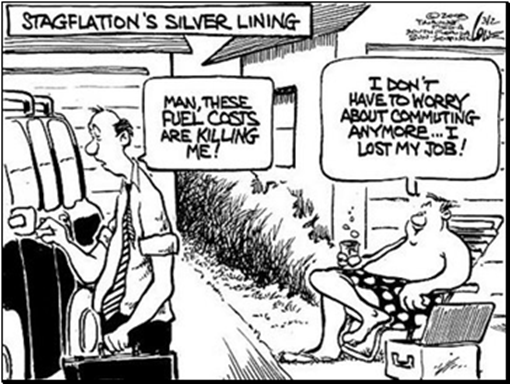
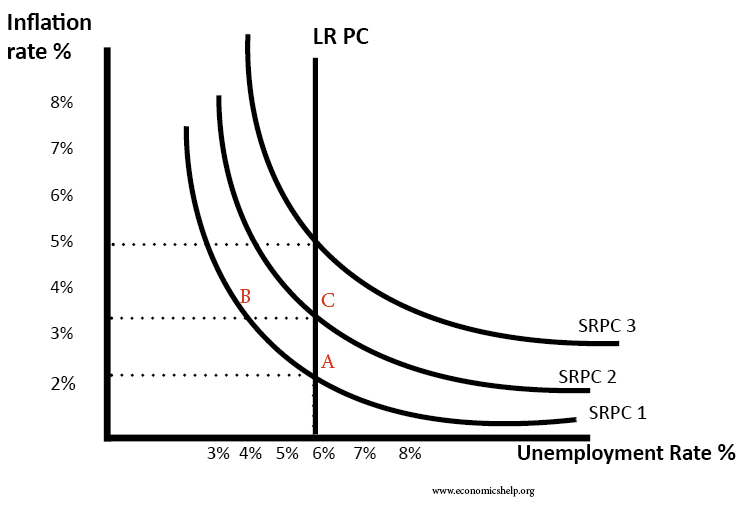
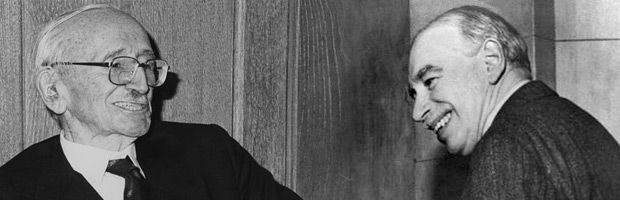
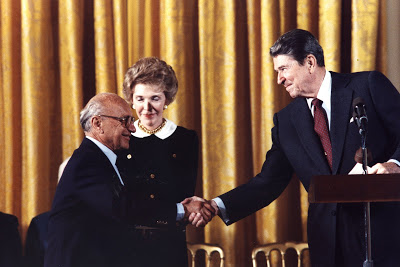
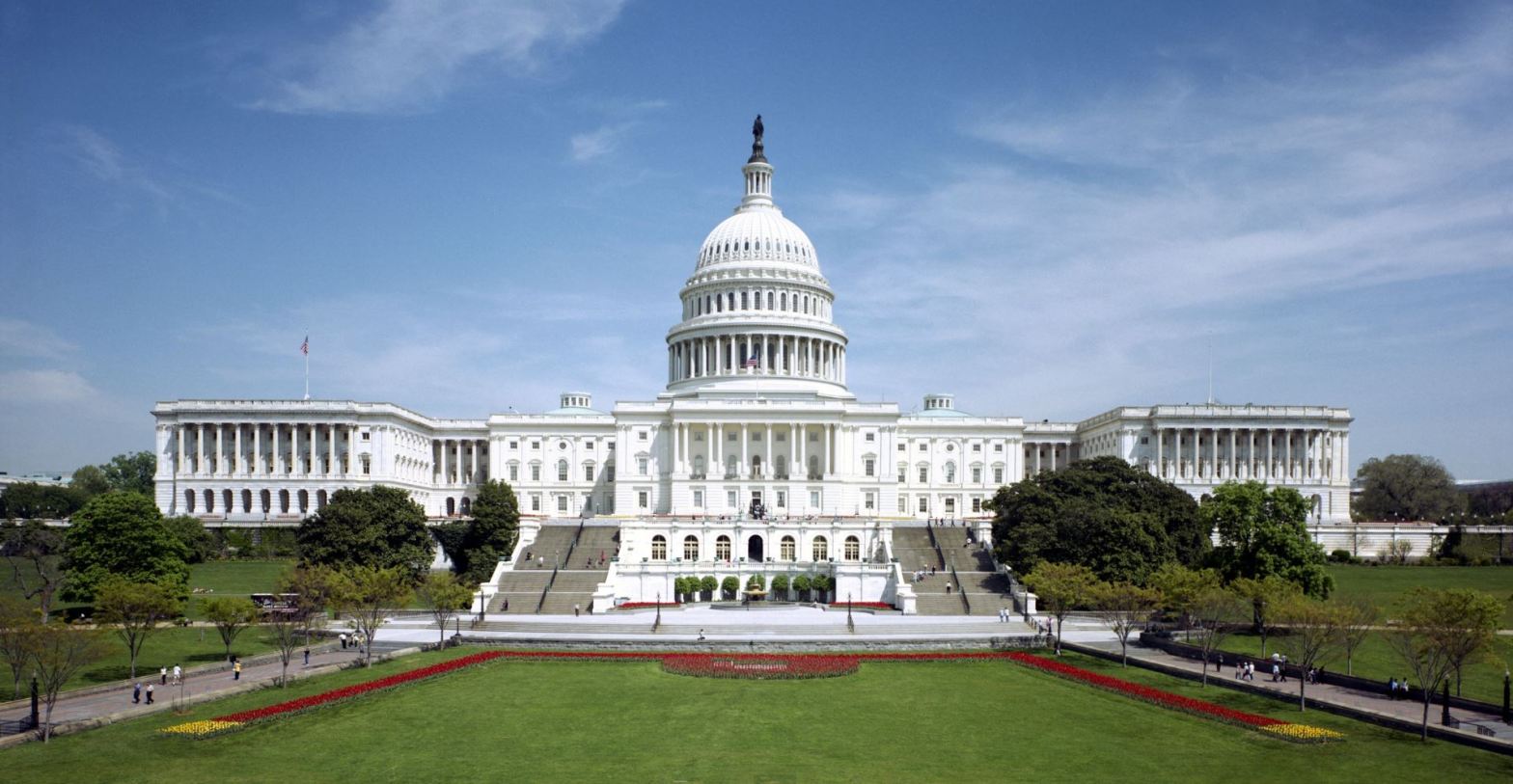
 21st Century Poltical Science